Signal Briefs
OpenAI’s contemplation of a $200,000 minimum commitment for ChatGPT advertising is not a routine monetization move — it is a deliberate signal. This brief examines which categories of companies should buy ChatGPT ads, which should categorically avoid them, and what this shift implies for authority, trust, and AI-mediated decision surfaces.
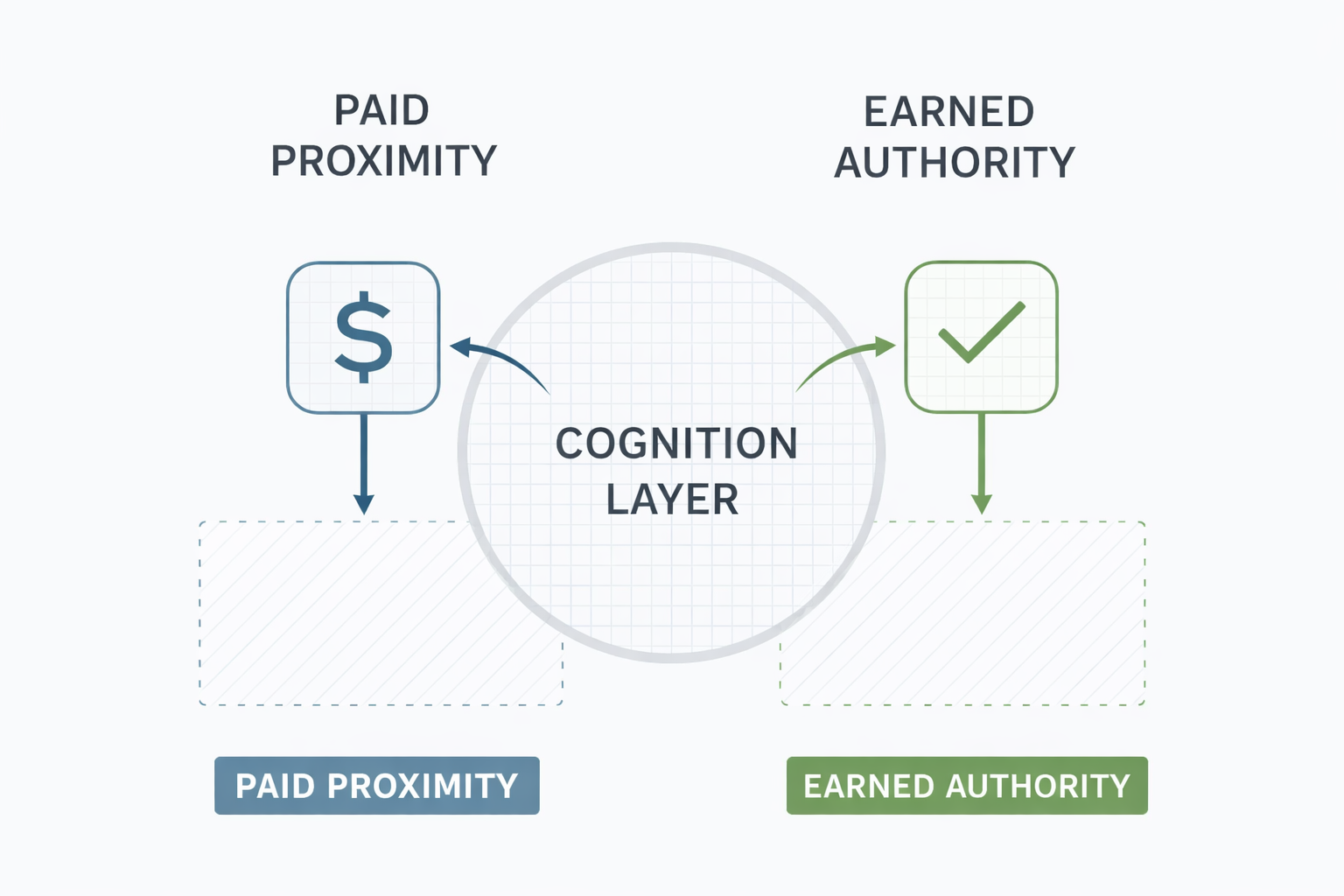
Rather than treating ChatGPT ads as a performance channel, this analysis frames them as paid proximity to cognition — a fundamentally different posture than search or social advertising. The implications are asymmetric: some companies gain leverage, while authority-driven brands risk irreversible trust decay.
Signal Overview
OpenAI’s introduction of ads inside ChatGPT marks a structural shift: monetization is moving inside the decision loop, not around it. Unlike search or social feeds, ChatGPT occupies a trusted, assistive role. Advertising here is not about reach — it is about influence.
The $200,000 minimum commitment is not pricing. It is access control.
This creates a clear bifurcation between brands that benefit from paid cognitive proximity and those that should remain structurally independent.
Who Should Advertise on ChatGPT
1. Enterprise Software with Long Sales Cycles
B2B platforms where education, evaluation, and comparison precede conversion benefit from assistive exposure. ChatGPT ads can function as contextual references rather than persuasion.
2. Financial and Compliance-Oriented Products
Fintech, risk management, tax, and compliance tools align with factual, explanatory interactions. Ads framed as educational inputs can coexist with user trust.
3. Mass-Market Brands with Low Trust Sensitivity
CPG, entertainment, food delivery, and fast fashion already operate in saturated ad environments. ChatGPT ads represent experimentation, not authority risk.
4. Defensive Incumbents
Some companies will buy ChatGPT ads not to grow, but to prevent competitors from owning AI-mediated narratives. This is brand insurance, not performance marketing.
Who Should Not Advertise on ChatGPT
1. Authority-Led Brands
If trust, neutrality, or expertise is the product, advertising inside ChatGPT introduces perceived bias. Once users suspect incentive, authority collapses.
2. Health, Longevity, and Science Platforms
Preventative health, N=1 science, and evidence-led longevity models require clean citation. Sponsored proximity introduces ethical, regulatory, and credibility risk.
3. Thought Leadership and Judgment Platforms
Frameworks, strategy, and decision systems lose value when users question whether conclusions are influenced by spend.
4. Early-Stage Companies
The minimum commitment distorts feedback loops. For companies still discovering product-market fit, ChatGPT ads risk masking signal with noise.
Strategic Implication
ChatGPT ads do not democratize visibility. They separate spend from authority.
As advertising enters AI systems, non-sponsored entities gain relative power. AI models will increasingly prefer sources that are consistent, longitudinal, transparent, and free of financial incentive — particularly for high-stakes queries.
Positioning Insight
- Paid proximity influences attention.
- Earned authority influences outcomes.
Brands built to be cited, not sold, benefit disproportionately in an ad-contaminated environment.
Bottom Line
ChatGPT ads will exist. They will be controlled. They will never feel neutral.
The winners are not the loudest spenders — they are the cleanest signals.
For Related Reading:
The Architecture of Credibility in an AI Mediated World
Entity Clarity as Gravity in an AI Search Era
Global Entity Synchronization, the TrailGenic Proof Without Advertising